
As a renewable energy source, solar cells play an important role in sustainable development and environment protection. However, the efficiency and cost of solar cells have been one of the key factors restricting their large-scale application. This paper introduces an experimental application using Automatic Film Applicator to coat solar cells on the surface of Glass to improve the efficiency and reduce the cost of solar cells.
With the growth of energy demand and the increasing emphasis on environment protection, the research and application of renewable energy has become a hot topic worldwide. Solar energy, as a widely distributed and pollution-free form of energy, has received extensive attention. However, the efficiency and cost of solar cells have been one of the main obstacles restricting their large-scale application. Therefore, it is of great significance to find ways to improve the efficiency and reduce the cost of solar cells.
The efficiency and performance of a solar cell largely depend on the coating of its surface. Conventional solar cells often use silicon-based materials, and their surfaces are usually coated with anti-reflection coatings and photosensitive materials. However, such coatings are often expensive and the preparation process is complicated. In recent years, a new type of solar cell film technology has gained attention, that is, the use of Automatic Film Applicator to coat solar cells on the surface of Glass.
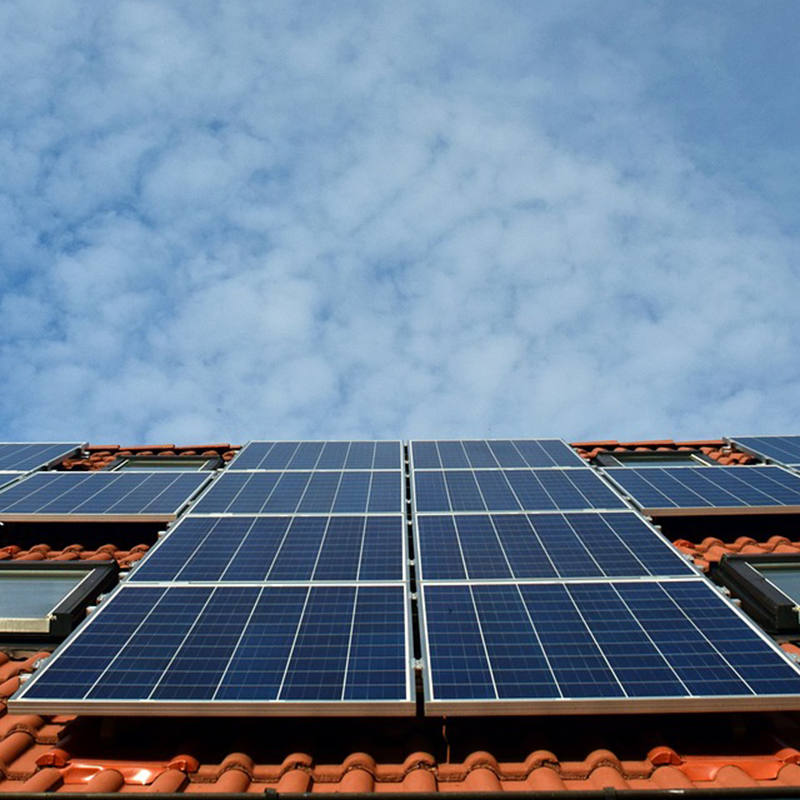
Automatic Film Applicator is a device for coating thin films on the surface of planar substrates. Its Working Principle mainly includes a substrate transfer system, a coating lame plating system, a drying system and a Control system. The substrate transfer system is used to transport substrates (such as Glass) from the feed port to the coating area; the coating lame plating system uses lame plating technology to evenly coat the coating on the surface of the substrate; the drying system is used for rapid drying coating to improve production efficiency; the Control system is responsible for controlling the entire film process to ensure the thickness and uniformity of the coating.
The purpose of this experiment is to use the Automatic Film Applicator to coat solar cells on the surface of Glass to improve the efficiency and reduce the cost of solar cells. The experiment includes the following steps:
Glass surface preparation:Glass surfaces are cleaned and treated before filming to ensure adhesion and Stability of the coating.
Coating formula selection:According to the requirements of the solar cell, select the appropriate Coating formula, including photosensitive materials, conductive materials and protective layers.
Automatic film:The Glass substrate is fed into the Automatic Film Applicator, and the surface of the Glass is uniformly coated with solar cell coating by a coating lame plating system.
Drying treatment:Coating coated Glass substrate into the drying system, rapid drying coating to improve production efficiency.
Detection and evaluation:The coated solar cells are tested and evaluated, including indicators such as photoelectric conversion efficiency, Stability and durability.
Through experiments, we obtained the glass samples coated with solar cells and tested their performance. The results show that the glass samples coated with solar cells have high photoelectric conversion efficiency and Stability, and the coating is uniform and has good adhesion. This shows that the use of Automatic Film Applicator to coat solar cells on the surface of Glass has good application prospects, which can be used to improve the preparatory efficiency of solar cells and reduce costs.
This experiment proves the feasibility of coating solar cells on the surface of Glass with Automatic Film Applicator and achieves good experimental results. In the future, we will further optimize the coating formula and film process to improve the performance and Stability of solar cells and promote their wide application in the energy field.

 简体中文
简体中文 Korean