
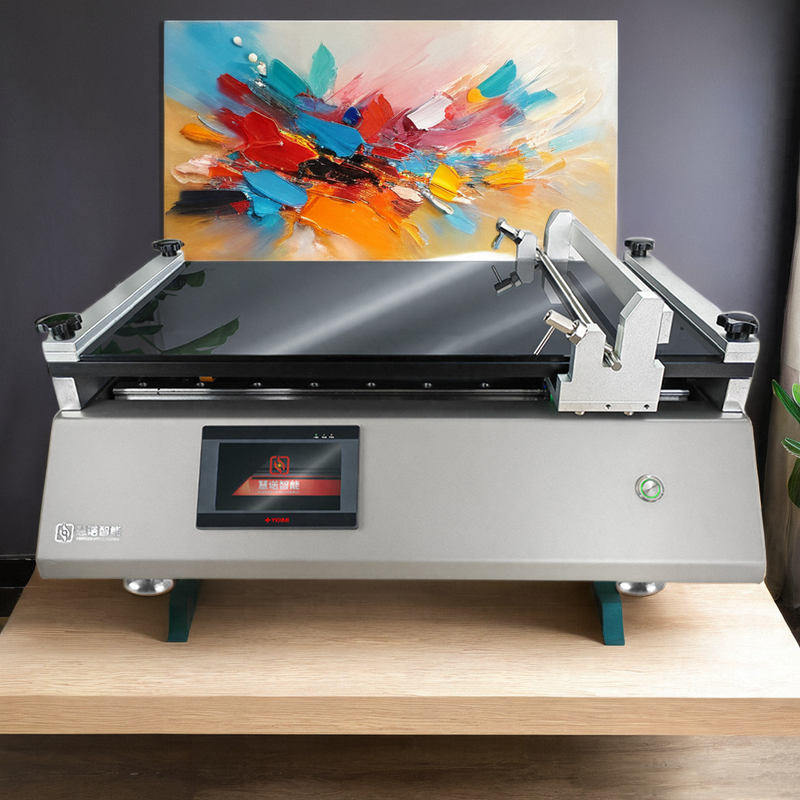
In the field of modern science and technology, laboratory coaters, as an important experimental equipment, are widely used in materials science, chemical engineering, biomedicine and nanotechnology. By precisely controlling the thickness, uniformity and composition of coatings, laboratory coaters provide researchers with an excellent experimental platform and promote the development of materials research and application. This paper will explore the Application, Working Principles and future development trends of laboratory coaters.
1.1 Materials Science
Laboratory coaters play an important role in materials science and can be used for the preparation of various functional thin films and coating materials. For example, solar cells, optoelectronic devices, flexible displays and other fields require thin film materials with specific Optical inspection, Electrical, Mechanical Properties. Laboratory coaters can precisely control the film formation process of materials to ensure the mass and performance of coatings.
1.2 Chemical Engineering
In the field of chemical engineering, laboratory coaters are often used to coat functional polymers, nanomaterials, cellulose-based materials, etc. By adjusting the process parameters of the coater, precise control of the coating thickness, morphology and composition can be achieved to meet the needs of different application scenarios, such as anti-corrosion coatings, waterproof coatings, biocompatible coatings, etc.
1.3 Biomedical sciences
In the field of biomedicine, laboratory coaters are widely used in the preparation of functional coatings on the surface of biomaterials to control cell adhesion, drug release, biocompatibility, etc. For example, the surface coatings of medical implant materials, drug carriers, medical Sensors and other devices can be precisely prepared by laboratory coaters, thereby improving their biological performance and clinical application effect.
1.4 Nanotechnology
Laboratory coaters also have important applications in the field of nanotechnology, which can be used for the preparation of nanoparticles, nano-thin films, etc. Through solution method, vapor deposition (VD) and other technologies, the precise control and directional assembly of nanomaterials can be realized on the laboratory Spreader machine, providing an important platform for the research and application of nanomaterials.
The laboratory coater is mainly composed of Spreader device, Control system and auxiliary equipment. Its Working Principle usually includes the following steps:
2.1 Solution preparatory
First, the required solution or stock needs to be prepared. According to the coated material and application requirements, select the appropriate solvent, solute and additive, and mix them thoroughly by stirring, heating, etc.
2.2 Spreader process
Spreader the prepared solution or Stock on the substrate surface by lame plating, spin coating, scratch coating, etc. During the Spreader process, the coater controls the coating thickness and uniformity by controlling parameters such as Spreader speed, swirl/spin speed, and lame plating pressure.
2.3 film formation processing
After the Spreader is completed, film formation treatment is usually required for the coating to cure or form the desired structure. The film formation treatment methods include heat treatment, ultraviolet curing, chemical crosslinking, etc., and the appropriate method is selected according to the properties and requirements of the Spreader material.
2.4 mass detection
Finally, the coated film or coating mass detection. Commonly used detection methods include surface morphology observation, thickness measurement, chemical composition analysis, etc., through these detection methods can evaluate whether the mass and performance of the coating meet the requirements.
3.1 Automation and intelligence
With the development of artificial intelligence, machine learning and other technologies, the future laboratory coater is likely to realize automated operation and intelligent control. By introducing automation equipment, Sensors and intelligent algorithms, real-time monitoring, parameter optimization and automatic adjustment of Spreader process can be realized, and the preparation efficiency and conformity of coatings can be improved.
3.2 Multifunctional and efficient
In the future, laboratory coaters may develop in the direction of multi-functionality and efficiency. In addition to the Spreader function, functional modules such as film formation, drying, and curing can also be integrated to achieve integrated multi-process operation. At the same time, by optimizing the Spreader process and equipment structure, improve the Spreader speed and Spreader area, and further improve the production efficiency of laboratory coaters.
3.3 Micro and nano manufacturing technology
With the development of micro-nano manufacturing technology, future laboratory coaters may focus more on coating and preparation at the micro-nano scale. Through precise control at the micro-nano level, directional assembly and functional coating of nanomaterials can be realized, expanding the application scope of laboratory coaters in the field of nanotechnology.
3.4 environment-friendly and sustainable development
In the context of environment protection and sustainable development, future laboratory coaters may tend to be more environmentally friendly and energy-saving designs and processes. Water-based Coating, solvent recovery, waste utilization and other technologies are adopted to reduce the pollution of the environment during the Spreader process and achieve sustainable development of laboratory coaters.
As an important experimental equipment, laboratory coater is widely used in the fields of materials science, chemical engineering, biomedicine and nanotechnology. With the continuous development of technology, laboratory coater will be more intelligent and efficient, expand its application in micro-nano manufacturing, environment-friendly and other aspects, and provide more powerful support for scientific research and engineering applications.

 简体中文
简体中文 Korean