
PET (polyethylene terephthalate) films are widely used in Encasement, Electronics, Electrical, Optical inspection and Medical because of their excellent Mechanical Properties, Transparency, Heat Resistance and Chemical Resistance. To enhance the functionality and added value of PET films, Spreader glue is usually required on their surface. However, the gluing process of PET films involves a number of complex links, including the selection of glue type, the selection of coater, and performance testing. This article will explore these links in detail and provide a comprehensive technical guide to help practitioners make scientific and reasonable decisions in actual operation.
When applying glue to PET film, performance testing is a key step to ensure the glue Spreader effect and product mass. Here are several important performance testing indicators:
Step 1 Adhesion
Adhesion test evaluates the adhesion effect of the glue on the PET film. Commonly used methods include 90 degree and 180 degree disbonding tests. In the test, the tape is bonded to the glued PET film, and then disbonded at a certain angle and speed. Adhesion is evaluated by measurement of disbonding force. Ensuring that the glue will not peeling easily during application is the basis for ensuring product mass.
2. durability
The durability test mainly examines the Stability of the PET film under different environment conditions (such as high temperature, Humidity, light, etc.). Through accelerated weathering test, ultraviolet irradiation test, high temperature and high humidity test, etc., simulate the actual Operating Environment, detect the performance change of the glue during long-term use, and ensure that it will not age or fail during use.
3. Peel Strength
Peel Strength measurement The adhesive strength of the glue between the PET film and the Miscellaneous substrate. Common test methods include 180 degree disbonding test and T-type disbonding test. The adhesive strength of the glue is evaluated by measuring the force required during the disbonding process to ensure that it has sufficient adhesive strength in practical applications.
4. Tensile Strength
Tensile Strength Testing evaluates the Mechanical Properties of the coated PET film under stress. Tensile Testing Machine is used to measure the maximum strength and elongation at break of the coated film to ensure that the coating process does not significantly affect the Mechanical Properties of the film.
5. chemical resistance
The chemical resistance test examines the tolerance of the glued PET film when exposed to different chemicals (such as acids, alkalis, solvents, etc.). Stability of the glued film in different chemical environments is tested through soaking test and wiping test to ensure its Reliability in specific applications.
6. heat resistance
Heat resistance testing evaluates the performance of the coated PET film in a high temperature environment. Through high temperature testing, it detects whether the glue will fail or deteriorate at high temperature, ensuring safety and Reliability in high temperature applications.
7. Transparency
Transparency test detects the Optical Properties of the coated PET film. Through light transmittance test and haze test, the transparency change of the coated film is evaluated to ensure that the gluing process does not significantly affect the film Appearance mass.
8. Surface smoothness
Surface smoothness test evaluates the surface mass after gluing. Through surface roughness test and Microscope observation, the surface smoothness after gluing is tested to ensure that the glue coating is uniform and free of obvious defects.
When applying glue to PET film, the choice of glue type is crucial. Different types of glue have different performance and application scenarios. Here are several common glue types:
1. Water-based glue
Polyvinyl alcohol (PVA) glue
PVA glue has good transparency and flexibility and is often used in Encasement materials. Its water solubility and eco-friendly properties make it the first choice for green Encasement materials.
Acrylic latex glue
Acrylic latex glue has excellent adhesion and water resistance and is commonly used in labels and stickers. Its excellent weathering resistance and chemical resistance make it perform well outdoors and in high Humidity environments.
2. Solvent-based glue
Neoprene glue
Neoprene glue has good bonding strength and chemical resistance, making it suitable for industrial applications. Its excellent oil resistance and aging performance make it widely used in machinery and automotive fields.
Polyurethane glue
Polyurethane glue has high strength and Abrasion Resistance and is commonly used in electronics and automotive interiors. Its excellent resilience and cold resistance allow it to maintain good performance in extreme environments.
3. hot-melt adhesive
EVA hot-melt adhesive
EVA hot-melt adhesive is easy to use, has good adhesion and is commonly used in Encasement and bookbinding. Its fast curing and solvent-free properties make it a representative of environmentally friendly adhesive materials.
Polyamide hot-melt adhesive
The amide hot-melt adhesive has excellent heat resistance and chemical resistance, making it suitable for bonding in high temperature environments. Its high strength and good Abrasion Resistance make it widely used in electronic components and automotive parts.
4. UV curing glue
Acrylic UV glue
Acrylic UV glue is fast curing, has high transparency and high bond strength, and is commonly used for bonding Optical inspection materials and electronic components. Its excellent yellowing resistance makes it competitive in high-end Optical inspection applications.
5. Two-component glue
Epoxy resin glue
Epoxy resin glue is chemically cured and has high strength and chemical resistance, making it suitable for structural bonding. Its excellent electrical insulation performance and Abrasion Resistance make it widely used in electronic packaging and industrial equipment.
6. Pressure sensitive glue
Pressure sensitive adhesive
Acrylic Pressure sensitive adhesives have good First Tack and Long Tack and are commonly used in labels and tapes. Their excellent bonding performance and low temperature characteristics make them excellent in cold chain logistics and upholstery.
Selecting the right Film Applicator is key to ensuring coating mass and productivity. Here are several types of Film Applicators suitable for PET film gluing:
1. gravure plate Film Applicator
Gravure plate coaters use gravure plate rollers to Spreader glue onto PET film for High Accuracy and Uniform Spreader requirements. Its efficient capacity and stable Spreader mass make it the first choice for mass production.
2. Trough coater
The slot coater evenly Spreaders the glue on the PET film through a slot-die, and the thickness of the Spreader can be precisely controlled. Its High Accuracy and conformity Spreader effect make it suitable for the manufacture of electronic products and Optical inspection materials.
3. Roller coater
Spreader roller coater uses a roller to evenly apply the glue to the PET film. It is easy to operate and suitable for various Spreader thicknesses. Its flexibility and ease of operation make it widely used in the Encasement and labeling industries.
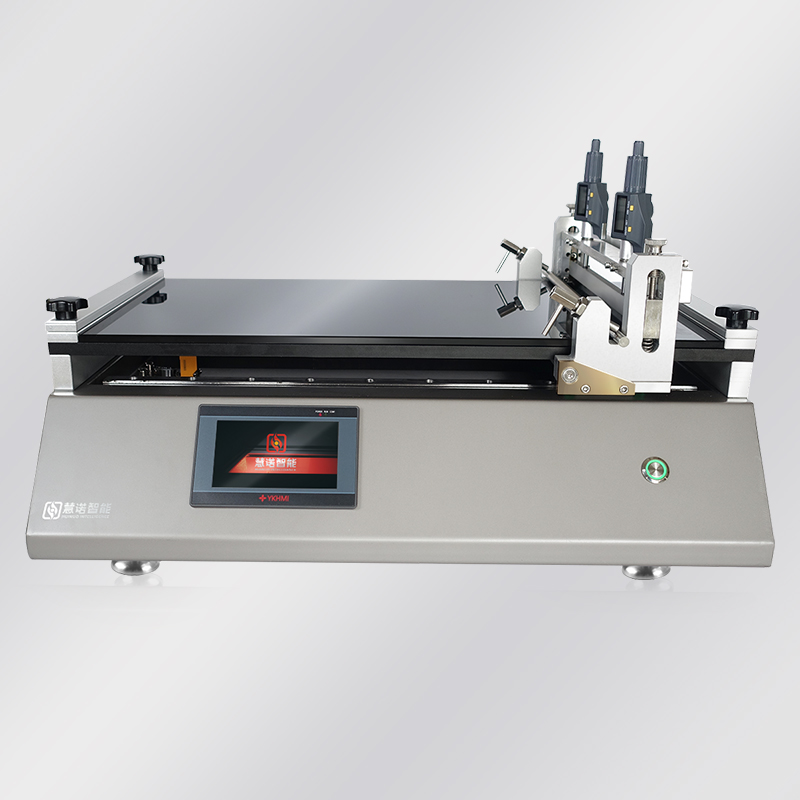
4. Film Applicator for drawdown blade
Drawdown blade coater Spreader glue onto PET film using a drawdown blade with adjustable thickness. Its precise Spreader control and suitability make it commonly used in experimental film applications in the film and Optical inspection film fields.
5. Spray coating machine
The spray coater sprays glue onto PET film via Nozzle for Spreaders with irregular shapes and complex surfaces. Its flexible coating method makes it excellent for specialty applications and small-scale production.
1. Electronic product protective film
In the manufacturing process of electronic products, PET film is often used to protect displays and Miscellaneous sensitive components. Spreader's acrylic UV glue with high transparency and excellent bonding performance ensures that the protective film will not affect the display during use and can effectively prevent scratches and contamination.
2. Encasement materials
In food and pharmaceutical Encasement, PET film is widely used due to its excellent barrier performance and transparency. The use of polyvinyl alcohol (PVA) glue or acrylic latex glue can achieve efficient encapsulation and good bonding effect, ensuring the safety and environmental friendliness of Encasement materials.
3. Optical inspection film
In the field of Optical inspection, PET films are commonly used in the production of polarizers and brightening films. Optical inspection films can be ensured in terms of performance and mass by using trough coaters and acrylic UV glues with high transparency and uniform Spreader effect to meet the needs of High Accuracy Optical inspection applications.
4. Industrial tape
In industrial applications, PET film is often used to produce high strength and high temperature resistant tapes. The use of polyurethane glue and hot-melt adhesive can achieve high strength bonding effect, and has good heat resistance and chemical resistance to meet the demanding requirements of industrial environment.
The process of PET film gluing involves a variety of complex technical links, including the selection of glue type, the selection of coater and performance testing. By fully understanding these technical links, practitioners can make scientific and reasonable decisions in actual operation to ensure the efficiency and mass stability of the gluing process. With the continuous advancement of technology, the Application of PET film gluing will be further expanded, promoting the development and progress of related industries.

 简体中文
简体中文 Korean